
A Beetroot, a Drought and a Bigger Question About Resilience
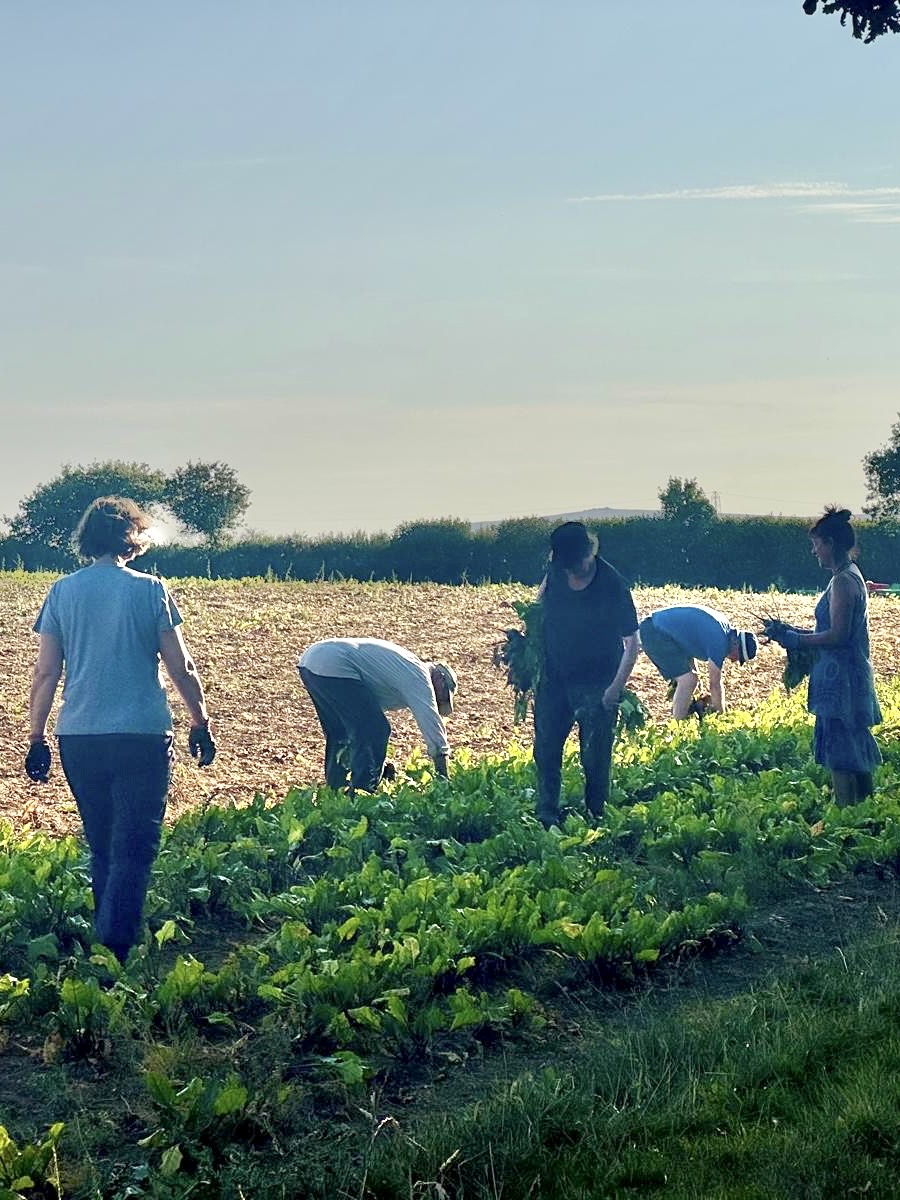
This week our gleaners gathered organic beetroot, generously donated by local farmers.
As we sorted the crop, we noticed damage in some of the roots. It would be easy to dismiss these blemishes, but they may be telling a much bigger story.
Across the countryside, prolonged dry weather is leaving its mark. Wild plants are drying back, soils have lost moisture, and we’ve observed changes in the behaviour of mammals that suggest food and water are becoming harder to find. When ecosystems come under stress, wildlife adapts. Insects, like mammals, may be forced to seek alternative sources of food and moisture. During a drought, a beetroot can become an attractive resource in a landscape where many plants are struggling.
Some may see this and conclude that the answer is simply to use insecticides. Agroecology sees it differently. Insecticides may help in the short term, but they are a sticking plaster rather than a solution. They do not address the underlying problem, especially when whole ecosystems are under stress.
If soils are drying out, habitats are becoming less resilient and wildlife is struggling to find resources, simply removing insects does not restore the health of the system. Insects are not only crop pests. They are also food for birds, mammals, amphibians and other invertebrates, forming part of the complex web of relationships that healthy ecosystems depend on. Reducing pest populations may sometimes be necessary, but long-term resilience comes from strengthening the system as a whole rather than focusing on individual symptoms in isolation.
Others may argue that the solution is more irrigation. Access to water is clearly important for food production, but drought is about more than a lack of water for crops. Healthy soils, diverse habitats and functioning ecosystems all help to capture, store and cycle water through the landscape. Irrigation can help crops survive, but it cannot by itself rebuild ecosystem resilience or address the wider impacts of climate change.
What is particularly striking is that this beetroot came from an organic farm with a strong commitment to biodiversity and soil health. These are exactly the kinds of farming systems that are often considered more resilient. Yet even here, the effects of prolonged drought appear to be rippling through the ecosystem.
The farmers who donated this crop were facing more than a reduction in the saleable harvest. They were also witnessing signs of stress in the wildlife and ecological systems they have spent years helping to nurture. That should give us pause for thought.
Healthy soils and thriving biodiversity are essential foundations of resilient food systems. But even these cannot fully compensate for a changing climate.
We see the consequences of food insecurity every day at Food in Community. When food becomes more expensive, it is usually people who are already experiencing hardship who are affected first. Climate resilience is therefore about more than protecting crops and wildlife. It’s about helping ensure that everyone can continue to access healthy nutritious food, regardless of their circumstances.
If we want farming, wildlife and communities to thrive, we must address the root causes of climate change while continuing to invest in nature’s recovery. This is not a choice between food production and nature. Healthy ecosystems underpin healthy food systems. The challenge is to create landscapes that can produce food, support wildlife and remain resilient in the face of increasingly extreme weather.
At Food in Community, we’re interested in the stories our food can tell. Sometimes a scar or blemish is not a sign that food should be wasted. Instead, it can reveal the complex relationship between climate, nature and the food on our plates.
Perhaps the lesson from this beetroot is that food security, nature recovery and climate action are not separate challenges. They are different aspects of the same challenge. If nature is struggling, food production will eventually struggle too. And when food systems come under pressure, so do the farmers, communities and households that depend on them.
Building resilience means investing in healthy soils, thriving biodiversity, resilient farming businesses and a stable climate. We need all four.

Food Security Starts with Making the Most of Every Harvest
For more than a decade, Food in Community has been rescuing surplus fruit and vegetables from farms, orchards and market gardens and ensuring they reach communities across the South West.
We believe food security in the future will depend not only on growing more food, but on wasting less of the food we already grow.
That belief is driving the next chapter of our work.
In 2025, with support from DEFRA, Food in Community began developing a new food production facility near Totnes, Devon, scheduled to open in the second half of 2026. This exciting new development will enable us to transform surplus fruit and vegetables into nutritious, extended-life ingredients, ensuring that even more of the harvest nourishes people, supports regional food security and creates value from food that might otherwise be lost. The facility is designed to transform seasonal abundance into improved year-round resilience, transforming farm surpluses into nutritious products that can be used long after the harvest has ended.
Why is a Food Production Facility Needed?
Climate change is bringing greater unpredictability, with periods of abundance sitting alongside periods of scarcity, and increasing challenges around crop quality, availability and distribution. Our production facility is being designed for exactly this future: capturing harvest gluts when they occur, preserving their value and ensuring that more of the food already grown can nourish people throughout the year.
Farmers regularly face situations where perfectly edible produce has no market due to oversupply, changes in demand, cosmetic specifications or labour shortages. These gluts are a natural feature of farming, but conventional supply chains are often too inflexible to respond quickly enough. Even redistribution has its limits. When a glut occurs, there is often an abundance across an entire region, making it difficult to find enough outlets before highly perishable produce deteriorates. Transporting fresh produce over long distances can further reduce quality, freshness and nutritional value. Yet that same produce could remain a valuable food resource if washed, prepared, frozen or otherwise preserved close to where it was grown, allowing it to be enjoyed long after the growing season has ended.
The new facility is being designed around the realities of surplus food, drawing on more than 13 years of experience working with horticultural surplus. Rather than operating like a conventional food factory with a fixed supply chain and narrow product range, it will provide adaptable production space capable of responding to whatever produce becomes available. This flexibility is at the heart of the project. It allows us to work with the harvest as it happens and make the most of opportunities when they arise.
Valuing Every Part of the Harvest
When a farmer plants a seed or plant, they invest far more than money. Every crop represents months of planning, work and expertise. It depends on healthy soils, water, sunlight, biodiversity and careful stewardship of the land. Yet every year significant quantities of perfectly edible food never make it into the food system. By creating routes for surplus produce to be sliced, diced, frozen and preserved, we can help ensure that more of this effort is valued.
Using the whole crop means making the most of everything that has gone into producing it. It means respecting the farmer’s hard work and making farming more economically sustainable. It means valuing the seed, the soil fertility, the water, the ecosystems and the energy required to grow food. Rather than demanding more production or bringing more land into cultivation, we make better use of what has already been produced. The produce rescued and repurposed over the lifetime of Food in Community has saved enough embedded water to fill more than 100 Olympic-sized swimming pools. In an increasingly drought prone world where pressure on resources is high, these things will help.
This approach also delivers important environmental benefits. The more efficiently we use food grown on existing farmland, the less pressure there is to increase agricultural production elsewhere. In the long term, making the most of every harvest can help free up space for habitat restoration and biodiversity recovery.
What Will the Facility Produce?
The facility will focus on producing simple, nutritious ingredients from surplus organic fruit and vegetables.
Depending on the season and available crops, produce may be washed, prepared, cut, frozen or otherwise preserved for use by community organisations, caterers and other food businesses. The emphasis will be on creating practical ingredients that maximise the value and usefulness of surplus produce while retaining as much of its nutritional benefit as possible.
Strengthening Food Security
Food security is often discussed in terms of producing more food, but it is equally important to make the most of the food we already grow.
Every year there are periods of abundance when farms produce more than the market can absorb. Without the right infrastructure, much of this food can be wasted. With the right infrastructure, those same gluts become an opportunity. By processing and preserving surplus produce, we can extend the lifespan of seasonal harvests and ensure that nutritious food remains available long after the growing season has ended. Food that would otherwise be lost can be transformed into valuable ingredients that support communities throughout the year.
This is more than a waste reduction initiative. It is an investment in resilience.
At a time of increasing uncertainty around food supply chains, climate disruption and rising living costs, the ability to preserve nutritious local food for future use is becoming increasingly important. Farmers are also seeking alternative routes to market. While an individual farm may not produce sufficient volume for long enough periods to supply larger customers, a shared processing facility creates the power of aggregation, enabling many farms to contribute together and access opportunities that would otherwise be out of reach.
A Practical Climate Change Adaptation
Global food systems face significant challenges in the decades ahead.
Food systems expert Jack Bobo has highlighted that global food production may need to increase substantially by 2050 to feed a growing population, while using less land, less water and fewer agricultural inputs. At the same time, climate change is expected to make food production more difficult. Research suggests crop yields may decline, while extreme weather events are likely to increase the frequency of crop losses, quality issues and market disruption. Increasingly, climate change is expected to create situations where food remains perfectly edible but falls outside commercial specifications, creating new opportunities and challenges for growers.
In this context, wasting food that has already been grown is a luxury we can no longer afford.
Food security in the future will depend not only on growing more food, but on wasting less of the food we already grow. The challenge facing society is not simply to grow more food. It is also to use the harvest more effectively. Preserving surplus crops is a practical and scalable way to improve food security, reduce waste and build resilience in the face of climate uncertainty. Rather than allowing gluts to be lost during times of abundance, this facility will help communities capture their value and use them when they are needed most.
At its heart, this project is about stewardship. It is about making the most of the resources that nature and farmers have already invested in producing food. By capturing seasonal abundance and preserving its value, we can reduce pressure on land, water and ecosystems while strengthening the resilience of communities and local food systems. We believe this is the kind of practical, scalable action that will be needed if we are to meet the twin challenges of climate change and biodiversity loss.
More Than a Building
Our new food production facility is much more than a processing space. It represents a significant step forward in Food in Community’s mission to create a fairer, more resilient and more sustainable food system.
By transforming surplus food into nutritious products, we can support farmers, strengthen local food security, reduce waste, protect natural resources and generate even greater social value for communities. In a world where supply disruptions can rapidly drive food price inflation and place healthy food out of reach for those on lower incomes, building local food resilience has never been more important. We hope this facility can demonstrate how local processing infrastructure across the UK and beyond can help regions make better use of the food they already grow while strengthening food security, supporting farmers and reducing environmental impact.
At a time when climate change, biodiversity loss and food insecurity are among the defining challenges of our age, making the most of every harvest is not simply common sense.
We are proud to be helping lead the way.
Because making the most of every harvest is part of building the food system of the future.
Inspired to help? Please spread the word and donate today to support our mission.

Fermentation Workshops
We run cooking workshops and a community garden at Daynes Farm … and we’ve recently teamed up with the amazing Hannah Walker from Gather & Nourish .
Fermentation offers a simple yet powerful way to preserve surplus fruit and vegetables, something that we work tirelessly to rescue and redistribute here at Food in Community. Each session brought a different selection of seasonal produce, giving us the opportunity to get creative. We experimented with a variety of vegetable combinations, herbs, and spices, alongside some of our favourite wild greens currently in abundance—wild garlic being a clear highlight.
Beyond the exciting flavour transformations, fermentation also delivers impressive nutritional benefits, supporting gut health and enhancing the natural goodness of the ingredients.
During the workshops, we created a vibrant range of ferments, including wild garlic kimchi, tomato and three-cornered leek salsa, pink kraut (featuring red cab bage, beetroot, apple, and ginger), pak choi and leek kraut, and an Ethiopian-inspired cucumber kimchi made with berbere in place of traditional gochugaru.
For many years, Food in Community has been doing incredible work to improve access to nutritious food across South Devon. With recent government funding, we’ve taken a major step forward by building a community food production facility designed to transform rescued organic produce, which might otherwise go to waste, into healthy, ready-to-use meals for those who need them most.
We need more support to help bring this vital space fully to life. If you’d like to be part of a positive shift in the local food system, please consider supporting and sharing our crowdfunder. Together, we can help make a lasting difference.
Donate to crowdfunder here

Support Our Crowdfunding Appeal
Invest in a Stable Food Future
Our new community food facility in South Devon is on the brink of transforming how local food is produced, shared, and saved from waste. The building is ready to go but we need some final funding to become fully operational.
The Goal
We’re raising £100,000 to bring the Hub to life. Each milestone unlocks a new stage, from final preparations to full-scale operation:
- £10,000 – Facility prepared and team trained
- £25,000 – Production trials and initial stock
- £50,000 – Fully operational and delivering food
- £75,000 – Increased capacity and regional impact
- £100,000 – Long-term stability and resilience
At £50,000, the Hub becomes operational, turning surplus produce into real meals for the community.
Why This Matters
Right now, large amounts of fresh, organic food go to waste while many people struggle to access nutritious meals. This facility changes that by:
- Rescuing surplus food from local farms
- Processing and preserving it for year-round use
- Supplying essential organisations like food banks, schools, hospitals, and community kitchens
With the capacity to handle up to 1,000 tonnes of produce annually, the Hub ensures good food reaches those who need it most — instead of being lost.
Supporting Farmers & Communities
The Hub provides farmers with a reliable outlet for surplus crops, reducing waste and improving livelihoods. At the same time, it strengthens local food security by reducing dependence on fragile supply chains.
This means:
- More stable food access
- Better prices
- Stronger local resilience
Environmental Impact
By preventing food waste, the project also cuts unnecessary emissions and resource loss, making it a practical climate solution as well as a social one.
Built to Last
This is not a short-term project. As a not-for-profit, the Hub will sustain itself by selling high-quality organic food while reinvesting all surplus back into its mission. The goal is a long-term, community-powered food system that works for everyone.
Be Part of the Change
Every donation helps move the Hub closer to full operation creating a future where:
- Good food is never wasted
- Farmers are supported
- Communities are nourished
Donate here today and help build a resilient, fair food system for generations to come.

Food in Community Announce Success in Defra Grant bid to Tackle Food Surplus at The Farm Gate
Food in Community CIC, is launching an innovative new food processing facility that promises to transform the way food waste is tackled, support farmers, and provide unique training opportunities to individuals who face barriers to employment. They aim to develop a blue print for the future of sustainable management of surplus produce in the fields whilst serving communities.
The vision has been made possible by a £1.5 million grant received from DEFRA as part of their ‘Tackling Food Surplus at the Farm Gate’ initiative. The funding is ring fenced for initial set up costs.
At its core, the centre will focus on several impactful initiatives:
- Fighting Food Waste: The factory will process surplus food from local farms that would otherwise go to waste while also reducing the region’s carbon footprint and promoting food sustainability.
- Training for Employment: The facility will offer hands-on training in food production and other industry-relevant skills to individuals who might otherwise face barriers to entering the workforce.
- Food Security: A working, replicable model of how food supplies can be increased for times of acute shortage.
Rachel Watson, Director at Riverford Organic Farmers, expressed her excitement about the new initiative:
“This partnership embodies Riverford’s enduring commitment to creating a fairer, more sustainable food and farming system. We have worked over the long term with Food in Community and we are delighted to support this fantastic initiative, with its commitment to reducing food waste and achieving social impact”
“For Food in Community, this collaboration represents an important milestone in the mission to promote fairness and inclusion in the food system and incorporate some robust action around food security going forward ” says David Markson, Co-Founder and director of Food in Community.
“Our partnership with South West Farmers and Riverford Organic is an exciting opportunity to scale up our impact. Together, we’ll provide essential support to local farmers adopting nature-friendly agricultural techniques, while also empowering individuals who’ve been excluded from traditional employment paths to build skills and confidence. This model truly demonstrates how a community-focused approach can solve some of our biggest challenges in food and farming.” adds Chantelle Norton, Director Food in Community
The new replicable processing unit will be designed from the ground up with sustainability in mind and input from UWE to ensure the most rigorous environmental standards are adhered to, including the use of renewable energy sources. The facility will serve as a model for other businesses seeking to align a positive social and environmental impact.
Our vision would be to include a stockpile of preserved produce in reserve for the use by the community in times of emergency.
This collaboration reflects a growing movement toward a more inclusive and environmentally responsible food economy, and both organizations believe it will inspire other businesses and communities to take similar action.

Grant News
Food in Community was recently awarded more than £31,000 by DEFRA from their Food Charities Grant Scheme, to help with the costs of buying food from local producers for its recipients during the pandemic.
Food Minister Victoria Prentis said:
“Food in Community has been doing brilliant work amid a significant increase in demand over the past few months. It is absolutely vital they have the resources they need and this funding has helped them provide food to some of the most vulnerable people in Totnes, and indeed across South Devon, at this enormously challenging time.”
Co-director David Markson said, "The DEFRA grant has enabled us to purchase food from around twenty local food producers at a time when demand from their hotel and catering customers fell. 100% of the money was to be spent on food for struggling households. It’s fantastic to be able to simultaneously support people in need of food parcels and businesses who are struggling financially due to the pandemic, local jobs and sustainable food production."
Food in Community was established in response to food waste, food poverty and social isolation. Volunteers collect and re-distribute surplus vegetables, fruit and other fresh food from local producers, benefiting vulnerable households across South Devon. This has equated to more than 2.5 tonnes per week of surplus and non-surplus high quality food being distributed, generating a massive saving for local charities whilst enabling them to treat their beneficiaries to the best quality fresh food.
Co-Director, Chantelle Norton added, “More than 25 organisations across South Devon have received food for their recipients to date as a result of this DEFRA grant, in addition to the households we help directly. One organisation told us that their clients were delighted and that the food was helping enormously, especially with the young families struggling to access nutritious fresh food. Feedback so far from end recipients of the food is that they are really enjoying eating it, with one describing it as ‘A ray of sunshine delivered to my doorstep.’”

Spring 2020 The Lockdown Issue
We thought we would update you on FiC’s plans for the weeks ahead now lockdown is upon us. This is when the solidarity and friendship we have nurtured together come into their own. Please do stay in touch and let us know if you need help, or can offer it. We are all going to need to reach out in different ways to get through this.
How to help yourself, neighbours and friends if experiencing loss of income
Many of us are experiencing a sudden drop in income. If this is causing immediate hardship, please check out the COVID-19 pages on your local council website. Most have links to the different grant schemes, although we are aware already that some are falling between the cracks. You can also find your local Citizen’s Advice Bureau online, and fill in the contact form to request a ring back. South Hams CAB staff are all working from home, they are experiencing higher volumes of enquiries than usual but they will get back by telephone, in a few days usually, and will advise regarding housing, bills, debt, benefits, and can refer to the food bank most local to you for an emergency food parcel. Get in touch with us if someone has no food in the house, are vulnerable or live with someone who is and they need food immediately. We are offering an emergency food doorstep delivery service for Totnes and district postcodes, in addition to our scheduled food delivery service.
Provision for medically vulnerable elderly
We started a new collaboration with Totnes Caring, where FiC deliver small packs of easy to prepare / eat food to their clients’ doorsteps. We delivered the first box to a lovely chap who is confined to his flat due to multiple health conditions. Next week we will be able to add fresh soup and pies due to the generosity of Tideford Organic soups and Clive’s Pies.
Produce Deliveries
Weekly produce box deliveries continue uninterrupted, with extra procedures to reduce the risk of infection to our volunteers, donors and recipients. We are fielding a much higher than usual volume of calls from the public requesting help but because we are not a phone advice service, we are signposting people to local services to help with money problems, issues with getting shopping delivered, issues with shielding food boxes, and in the meantime are working hard to increase our supply of surplus food for food banks and people in crisis.
Our suppliers are being absolutely brilliant about donating food despite the huge uncertainties for their own operations. Orders are down for some, whilst for others orders are through the roof, but some are already having to reduce their output due to staff absence. Please do support our local ethical food businesses if you possibly can by buying their products, liking their social media posts and directing friends who have lost work to help them fill any advertised gaps in their workforce. They give back quietly and so generously behind the scenes by donating their surplus food and for the good of our community. FYI Riverford temps are recruited through Mego Recruitment.
Provision for families during school closure
Whilst schools and charities we usually support have paused most activities, we are collaborating with the Connection Hub (Totnes Food Bank) to put together recipe food boxes for their clients and families in receipt of free school meals. We combed the extensive FiC cafe archives for straightforward recipes that the families at home together can replicate and that children will enjoy.
Food in Community continues to run on a shoestring, we do a lot with relatively little, but we are reliant on income from our cafes, events and workshops to keep our van on the road and cover other essential expenses such as insurance, which is shortly due for renewal. If you feel able to help, or know of anyone who is keen to support our work by donating, Food in Community’s bank details are as follows:
Coop bank
Sort code 08 92 99
Account no 65637340 Thank you x
Pay What You Feel Community Cafes
Cafes in Newton Abbot and Totnes will be cancelled for the time being, so we are continuing to prioritise supplying produce to food banks and COVID-19 support groups who are cooking for people who cannot prepare their own meals. We are offering a stand in service for cooks who are making meals for the vulnerable, who may have to self isolate, may be struggling with childcare, or need a break.
Looking beyond the pandemic, our pay what you feel cafes like ours could have a vital role in rebuilding our communities and could offer a vital stepping stone back to work for displaced catering and hospitality workers. We would like to see a (government supported?) community café in every town and village, and a pay what you feel model, meaning that everyone can eat good sustainably produced food in a friendly environment and at a fair price.
Gleaning update
Local farmers and growers are real heroes, especially in the current crisis, ensuring there is still good food available. Before we enter the hungry gap, when food is not being harvested locally, we will be field gleaning. Due to the risks of lift sharing with people you don’t live in the same space with, we can only bring a small number of gleaners and all must drive separately to the gleaning location in the South Hams. Let us know if you can help.
STOP PRESS ……
FiC was filmed today by Riverford’s Wicked Leeks team. We were asked about the impact the coronavirus is having on people who rely on food donations and the wider issues of food poverty, inequality and isolation and how FiC helps to address this. Great to be asked. Look out for that piece on social media very soon.
And finally……….
The very talented and engaging Newton Abbot Ukulele band pictured above at a fundraising event for FiC at Ashprington Village’s Coffee Morning recently. An amazing and very useful £160 was raised! A very big thank you to our volunteer David Davis who organised the event and also played and to the residents of Ashprington village who attended and gave very generously.

New pay what you feel cafe to launch in Newton Abbot
We are excited to announce that Food in Community are about to open the doors on a new pay what you feel community café in Newton Abbot. Saturday 23rd February 2019, with lunch served from 12.30 - 2.30.
Imagine a tasty hot meal in a friendly and welcoming atmosphere, there is acoustic music playing quietly in the background, and a hum of chatter. Then imagine being invited to pay what you can afford for your meal, knowing that all profits go to help provide good food for local families and tackling food waste.
Every week of the year, Food in Community’s volunteers source fresh surplus, mainly organic vegetables, fruit and other fresh produce and deliver it every week of the year to charities and community groups, including food banks, soup kitchens, nurseries, schools, youth groups and carer’s groups. It also runs cooking courses, workshops, and provides a catering service for community events. About four years ago, Food in Community started Totnes’s first ‘Pay What You Feel’ café using some of the surplus food collected, and it is now a very popular monthly social event.
“We saw that we had created something of value, using food to bring people together,” says David Markson, co-Director of Food in Community. “Last year, Food in Community won Transformative community business of the year, a national award bestowed by Social Enterprise UK in recognition of our social and environmental impact. When we asked why out of all the projects in the country, the judges had chosen our project, they said that our work could and should be replicated elsewhere. As we get a number of diners from Newton Abbot at our Totnes café, and we have existing relationships with charities in Newton Abbot, it made sense to us to start a similar café here.”
Chantelle Norton, also a co-Director, says “I’m excited by the enthusiasm shown for the new cafe locally, from the public, local councillors, the Avenue Church and charities providing food to people in crisis.” She added, “I’m also looking forward to getting to know new volunteers and introducing them to working with surplus food. We select the best ingredients, and the menu planning is a lot of fun, like the TV show ‘Ready, Steady, Cook’ but on a bigger scale. We usually serve at least one hearty main course with sides, salads, soup and bread, and we make sure that there are always decent vegan and gluten free options on offer. It’s really rewarding to see people enjoying what you’ve served and having a good time.”
The friendly café team welcomes new volunteers. If you would like to get involved on the day at the café helping to prepare the food, or with front of house duties, for an hour or so helping to set up and make the venue welcoming, please get in touch. We are also on the lookout for local musicians: please contact us if you are interested in performing at the lunch. We also welcome young musicians who would like the experience of playing to a live audience in an unpressured environment. All volunteers eat and drink on the house of course!
Lunch, teas, coffee and cake will be served between 12.00-2.30 at the Avenue Church hall on Saturday February 23rd, then Saturday March 30th, and then on the fourth Saturday of each month. We look forward to welcoming you.